
Anúncios
Brain-Computer Interface (BCI) technology is revolutionizing assistive devices, transforming how individuals with disabilities interact with robotic prostheses and exoskeletons to regain independence and mobility.
🧠 The Dawn of Mind-Controlled Mobility
Imagine controlling a robotic arm with nothing but your thoughts, or walking again after paralysis by simply thinking about movement. This isn’t science fiction—it’s the emerging reality of Brain-Computer Interface integration in assistive technology. The convergence of neuroscience, robotics, and artificial intelligence is creating unprecedented opportunities for people living with limb loss, paralysis, or mobility impairments.
Anúncios
The global assistive technology market is experiencing exponential growth, with BCI-enhanced devices representing the cutting edge of rehabilitation and restoration engineering. These systems bypass damaged neural pathways, creating direct communication channels between the human brain and external devices, fundamentally changing what’s possible in prosthetic and exoskeleton technology.
Understanding Brain-Computer Interface Technology
Brain-Computer Interfaces work by detecting and interpreting neural signals generated when we think about movement or action. These electrical impulses, measured through various methods, are translated into commands that control external devices with remarkable precision.
Anúncios
How BCIs Capture Your Intentions
The technology relies on capturing brain activity through different approaches. Non-invasive methods use electroencephalography (EEG) with sensors placed on the scalp, detecting electrical patterns from neurons firing beneath. While less precise than invasive alternatives, EEG systems offer safer, more accessible options for widespread adoption.
Invasive BCIs involve surgically implanted electrodes directly in brain tissue, providing higher resolution signals and more accurate control. These systems can detect individual neuron activity, enabling finer motor control in prosthetic devices. Semi-invasive approaches place sensors beneath the skull but outside brain tissue, balancing signal quality with reduced surgical risk.
Signal Processing and Machine Learning
Raw brain signals require sophisticated processing before becoming usable commands. Advanced algorithms filter noise, identify meaningful patterns, and translate neural activity into device instructions. Machine learning systems continuously improve accuracy by adapting to each user’s unique brain patterns, creating increasingly intuitive control experiences.
Modern BCI systems employ artificial neural networks that learn from repeated use, recognizing when you’re thinking about grasping an object versus releasing it, or intending to walk forward versus stopping. This adaptive intelligence makes devices feel less like tools and more like natural extensions of the body.
⚡ Transforming Prosthetic Limb Technology
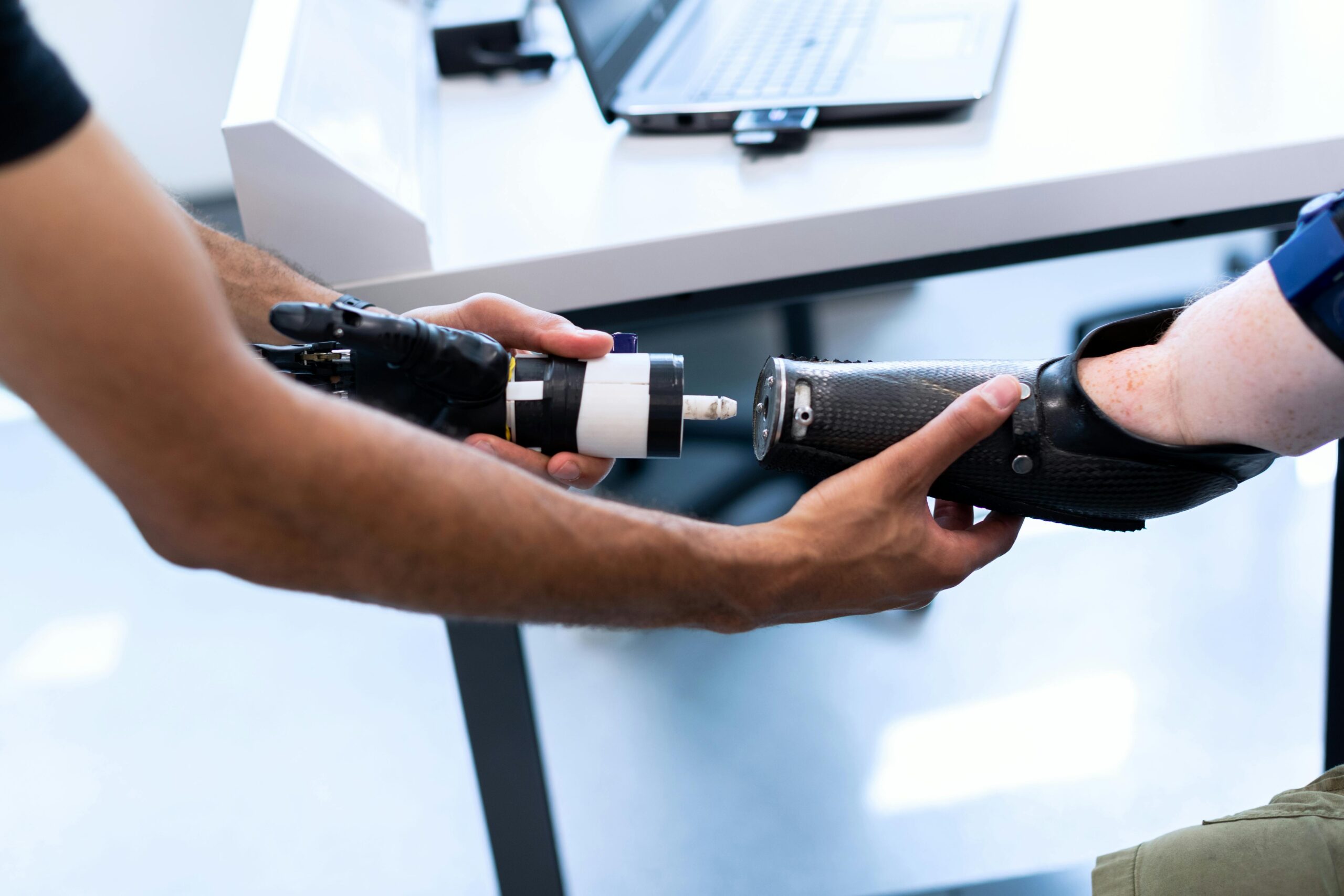
Traditional prosthetics rely on mechanical switches, myoelectric sensors detecting muscle contractions, or body-powered cable systems. While functional, these approaches lack the intuitive control and sensory feedback of natural limbs. BCI integration is changing this paradigm entirely.
Next-Generation Robotic Prostheses
BCI-controlled prosthetic arms now perform complex manipulation tasks previously impossible with conventional devices. Users can control individual fingers, adjust grip strength, and perform delicate operations like picking up an egg without crushing it—all through thought alone.
The technology enables simultaneous multi-joint control, allowing users to move shoulder, elbow, wrist, and fingers concurrently, mirroring natural arm movement. This represents a quantum leap from sequential control systems requiring users to switch between joint modes.
Restoring Sensory Feedback
Perhaps most remarkably, bidirectional BCIs don’t just send commands to prosthetics—they receive information back. Sensors in robotic fingers detect pressure, temperature, and texture, transmitting this data to the brain through electrical stimulation. Users report actually feeling objects they touch through their prosthetic hands.
This sensory restoration profoundly impacts functionality and psychological wellbeing. Phantom limb pain often decreases when users regain sensation through their prostheses. The brain begins recognizing the artificial limb as part of the body rather than an external tool, a phenomenon called embodiment.
🦿 Exoskeletons: Walking Through Thought
Robotic exoskeletons provide external support and powered assistance for mobility, particularly transformative for individuals with spinal cord injuries or neurological conditions affecting movement. BCI integration elevates these devices from remotely-operated machines to natural extensions responding to neural intent.
From Wheelchair to Walking
BCI-controlled exoskeletons enable paraplegic users to stand, walk, and navigate obstacles through natural thought processes. Rather than manipulating joysticks or pressing buttons, users simply think about walking, and the exoskeleton responds—much like sending signals to biological legs.
The technology detects neural patterns associated with gait initiation, weight shifting, and stepping. Sophisticated algorithms anticipate user intentions, adjusting support and movement parameters in real-time to maintain balance and smooth locomotion across varying terrain.
Rehabilitation and Neuroplasticity
Beyond mobility restoration, BCI-integrated exoskeletons serve as powerful rehabilitation tools. The brain-machine feedback loop promotes neuroplasticity—the brain’s ability to form new neural connections. Users engaging motor cortex regions through BCI training sometimes experience partial recovery of biological function.
Clinical studies demonstrate that regular BCI exoskeleton use can improve bowel and bladder control, reduce secondary complications from immobility, and enhance cardiovascular health in paralyzed individuals. The psychological benefits of regaining upright mobility significantly improve quality of life and mental health outcomes.
🔬 Technological Breakthroughs Driving Innovation
Recent advances across multiple disciplines are accelerating BCI integration in assistive devices, making systems more reliable, affordable, and user-friendly than ever before.
Miniaturization and Wireless Systems
Early BCI systems required users to be tethered to bulky computing equipment, severely limiting practical applications. Modern wireless BCIs use miniaturized processors and batteries, enabling free movement and all-day use. Some implantable systems now smaller than a coin communicate wirelessly with external devices, eliminating infection risks from percutaneous connectors.
Improved Signal Quality and Processing Speed
Advances in electrode materials and placement techniques yield cleaner signals with less interference. High-density electrode arrays capture more detailed neural activity, enabling finer control resolution. Processing latency has decreased dramatically—modern systems translate thought to action in milliseconds, approaching the speed of natural neural transmission.
AI-Powered Adaptation
Artificial intelligence algorithms continuously learn user-specific neural patterns, reducing training time and improving accuracy over extended use. These systems automatically recalibrate when detecting signal drift, maintaining consistent performance without requiring manual adjustments.
Deep learning models predict user intentions before movement completion, enabling predictive assistance where devices anticipate and support intended actions. This proactive response creates remarkably fluid, natural-feeling control.
Real-World Success Stories 🌟
The true measure of any technology lies in its impact on human lives. BCI-integrated assistive devices are delivering life-changing outcomes for people worldwide.
Returning to Daily Activities
Jan Scheuermann, paralyzed from the neck down, used a BCI-controlled robotic arm to feed herself chocolate for the first time in nearly a decade. Her story, documented by researchers at the University of Pittsburgh, demonstrated the technology’s potential for restoring independence in activities of daily living.
Veterans with combat-related amputations are returning to active careers using BCI prosthetics, performing jobs requiring dexterity and strength previously unattainable with conventional prostheses. Some report their advanced prosthetics enable capabilities exceeding their original biological limbs in specific applications.
Pediatric Applications
Children with congenital limb differences are growing up with BCI prosthetics that adapt as they develop, learning alongside their young users. Early exposure to these devices during critical developmental periods may enhance neural plasticity and integration, potentially enabling even more natural control than adult adoption.
⚠️ Challenges and Considerations
Despite remarkable progress, several hurdles must be addressed before BCI-integrated assistive devices achieve widespread adoption.
Cost and Accessibility
Advanced BCI systems remain prohibitively expensive for most users, often costing hundreds of thousands of dollars. Insurance coverage varies widely, with many providers reluctant to fund experimental or newly-approved technologies. Expanding accessibility requires manufacturing scale-up, standardization, and policy advocacy to ensure equitable access.
Surgical Risks and Long-Term Reliability
Invasive BCIs require neurosurgery with inherent risks including infection, immune response, and tissue scarring that degrades signal quality over time. Long-term implant durability remains uncertain—most current systems have been tested for only a few years, while users need devices lasting decades.
Non-invasive alternatives avoid surgical risks but provide less precise control and require more extensive training. Research continues seeking optimal balance between performance, safety, and invasiveness.
Training and User Experience
Learning to control BCI devices requires significant training time and mental effort. Users must develop consistent neural patterns the system can reliably detect, essentially learning a new skill similar to playing an instrument. Reducing cognitive load and training duration represents a critical usability challenge.
Ethical and Privacy Considerations
BCIs that read brain activity raise profound privacy questions. What protections prevent unauthorized access to neural data? Could such systems eventually detect thoughts beyond movement intentions? Establishing robust security protocols and ethical frameworks is essential as technology advances.
🚀 The Future Landscape of BCI Assistive Technology
The trajectory of BCI development suggests even more remarkable capabilities emerging within the next decade.
Sensory Augmentation Beyond Restoration
Future systems may not merely restore lost sensation but enhance human capabilities beyond natural limits. Prosthetics with integrated sensors could detect infrared radiation, magnetic fields, or chemical signatures, expanding human perception into new domains.
Brain-to-Brain Communication
Research exploring direct brain-to-brain interfaces could enable prosthetic users to receive assistance from caregivers through direct neural communication, or allow rehabilitation specialists to literally understand patients’ experiential challenges by sharing neural states.
Regenerative Medicine Integration
BCI technology may eventually bridge to biological restoration therapies. Systems maintaining neural pathway activation during regenerative treatments could prevent neural degeneration and facilitate integration when biological function returns through stem cell therapy or nerve regeneration.
Standardization and Modularity
Industry movement toward standardized interfaces would enable users to switch between different prosthetic or exoskeleton systems without retraining, similar to using different computer peripherals. Modular designs could allow component upgrades without replacing entire systems, improving affordability and sustainability.
💡 Supporting the BCI Revolution
Accelerating BCI assistive device development requires coordinated effort across multiple stakeholders.
Research Funding and Clinical Trials
Continued investment in basic neuroscience research, engineering development, and clinical validation studies remains essential. Governments, private foundations, and industry partnerships must sustain funding through the lengthy development and approval processes.
Regulatory Frameworks
Adaptive regulatory approaches balancing innovation encouragement with safety assurance will determine how quickly advanced devices reach users. Accelerated approval pathways for breakthrough devices, similar to those for life-saving medications, could expedite access while maintaining appropriate oversight.
Education and Awareness
Healthcare providers, rehabilitation specialists, and potential users need education about BCI capabilities, limitations, and appropriate applications. Dispelling unrealistic expectations while highlighting genuine potential ensures informed decision-making and appropriate candidate selection.
🌈 Redefining Human Potential
Brain-Computer Interface integration in robotic prostheses and exoskeletons represents more than technological achievement—it fundamentally challenges definitions of disability, ability, and human potential. These devices don’t merely compensate for impairments; they offer new modes of human-machine collaboration that may eventually benefit everyone.
The vision of thought-controlled mobility and manipulation is transitioning from laboratory curiosity to clinical reality. While challenges remain, the trajectory is clear: BCIs will increasingly enable people with disabilities to live fuller, more independent lives, participating in activities once deemed impossible.
As technology matures, costs decrease, and accessibility expands, BCI-integrated assistive devices will become standard rehabilitation tools rather than experimental luxuries. The coming decade promises to deliver on the technology’s transformative potential, unlocking possibilities that extend human capability beyond what nature alone provides.
For individuals living with limb loss or paralysis, BCI technology offers something profoundly valuable: hope grounded in scientific reality. The promise that thoughts can once again become actions, that mobility can be restored, and that independence can be reclaimed. This isn’t merely about machines—it’s about restoring the fundamental human experience of agency, the ability to interact with and shape the world according to our will.
The integration of Brain-Computer Interfaces with robotic prostheses and exoskeletons stands as testament to human ingenuity and perseverance. By bridging mind and machine, we’re not just building better devices—we’re expanding the boundaries of what it means to be human, creating a future where physical limitations need not constrain human potential.
