
Anúncios
Long-haul trucking demands precision, efficiency, and safety on the road. GPS apps designed specifically for truck drivers have become essential tools, transforming how professionals navigate highways, avoid restricted routes, and optimize delivery schedules.
Unlike standard navigation systems built for passenger vehicles, truck-specific GPS applications account for vehicle dimensions, weight restrictions, bridge clearances, and hazardous material regulations. These specialized features prevent costly detours, fines, and potentially dangerous situations that could arise from following unsuitable routes.
Whether you’re an owner-operator managing your own fleet or a company driver looking to improve route efficiency, understanding the capabilities and benefits of trucker GPS apps can significantly impact your daily operations and bottom line. Let’s explore what makes these applications indispensable for modern trucking professionals. 🚛
Why Standard GPS Apps Fall Short for Commercial Truckers
Regular GPS navigation apps like Google Maps or Waze work wonderfully for cars, but they can lead truck drivers into serious trouble. These consumer-focused applications don’t consider the unique challenges facing commercial vehicles on the road.


A typical navigation app might route you through residential streets with low-hanging trees, narrow bridges with weight limits your loaded rig exceeds, or roads where commercial vehicles are explicitly prohibited. The consequences range from traffic citations and damaged equipment to being physically stuck in situations requiring expensive emergency assistance.
Truck-specific GPS apps solve these problems by incorporating comprehensive road restriction databases. They calculate routes based on your vehicle’s actual specifications—height, weight, length, number of axles, and cargo type. This intelligent routing saves time, money, and prevents the frustration of discovering too late that your planned route is impassable.
Essential Features Every Trucker GPS App Should Have 📱
Not all truck navigation apps are created equal. Professional drivers need robust features that address the real-world challenges of commercial transportation. Here are the capabilities that separate excellent apps from mediocre ones:
Custom Vehicle Profile Settings
The best apps allow you to input your truck’s exact specifications. This includes height, width, length, weight (both empty and loaded), number of axles, and trailer configuration. Some advanced applications even let you save multiple vehicle profiles if you operate different trucks or switch between configurations.
This customization ensures every route suggestion accounts for your specific vehicle’s limitations. A route perfect for a standard semi might be completely inappropriate for an oversized load or a tanker carrying hazardous materials.
Real-Time Traffic and Weather Updates
Weather conditions affect trucks differently than passenger vehicles. Heavy rain, snow, or ice that merely slows down cars can make driving a loaded semi extremely dangerous or impossible. Quality GPS apps integrate weather forecasts along your route and suggest alternatives when conditions deteriorate.
Real-time traffic information helps you avoid congestion, accidents, and construction delays. For drivers on tight delivery schedules, knowing about a traffic jam twenty miles ahead allows time to reroute rather than sitting idle burning fuel and losing hours.
Truck Stop and Service Location Database
Finding suitable parking, fuel, repairs, and amenities isn’t as simple for truckers as pulling into any roadside stop. Specialized GPS apps include databases of truck stops, weigh stations, rest areas with truck parking, repair facilities, and other essential services.
Many apps provide user reviews and ratings, fuel price comparisons, and information about available amenities like showers, restaurants, and WiFi. This crowdsourced intelligence helps drivers make informed decisions about where to stop for breaks or overnight parking.

Top Benefits of Using Dedicated Truck GPS Applications 🎯
Investing in a quality truck navigation app delivers tangible benefits that quickly justify any subscription costs or initial purchase price. Professional drivers who make the switch consistently report improvements across multiple areas of their operations.
Significant Time Savings
Time is money in the trucking industry. Every minute spent on inefficient routes, searching for appropriate parking, or dealing with route restrictions cuts into profitability. Truck GPS apps optimize your routing to minimize travel time while respecting all necessary restrictions.
Drivers report saving hours on long hauls by avoiding traffic congestion, finding faster alternative routes, and eliminating the frustration of discovering route problems too late to easily correct them. These time savings accumulate significantly over weeks and months of driving.
Reduced Fuel Consumption
Fuel represents one of the largest operating expenses for truckers. Efficient routing directly impacts fuel consumption. By providing the most direct appropriate route and helping drivers avoid traffic delays where engines idle wastefully, GPS apps contribute to measurable fuel savings.
Some advanced applications even incorporate elevation data into route planning, preferring routes with fewer steep grades when alternatives exist. For heavy loads, avoiding unnecessary climbing can produce substantial fuel economy improvements.
Enhanced Safety and Compliance
Safety should always be the top priority for professional drivers. Truck GPS apps enhance safety by keeping you on appropriate roads, warning about sharp curves, steep grades, and other potential hazards ahead. Many apps also integrate Hours of Service (HOS) tracking to help ensure regulatory compliance.
By preventing situations where drivers end up on unsuitable roads, these applications reduce accident risks and the stress associated with navigating challenging situations in large commercial vehicles. Lower stress contributes to better decision-making and safer overall operations.
Understanding Route Restriction Intelligence 🚧
The core value proposition of truck-specific GPS applications lies in their sophisticated understanding of road restrictions. This intelligence comes from multiple data sources and continuous updates to ensure accuracy.
State and local governments maintain databases of bridge heights, weight limits, seasonal restrictions, and prohibited routes for commercial vehicles. Quality GPS apps aggregate this information and cross-reference it with your vehicle specifications to automatically exclude inappropriate roads from route calculations.
Low clearance warnings prevent the terrifying experience of approaching a bridge or tunnel and realizing too late that your truck won’t fit. Weight restriction awareness keeps you off bridges that couldn’t safely support your loaded vehicle. Width and length considerations prevent routes through areas where your rig simply wouldn’t physically fit.
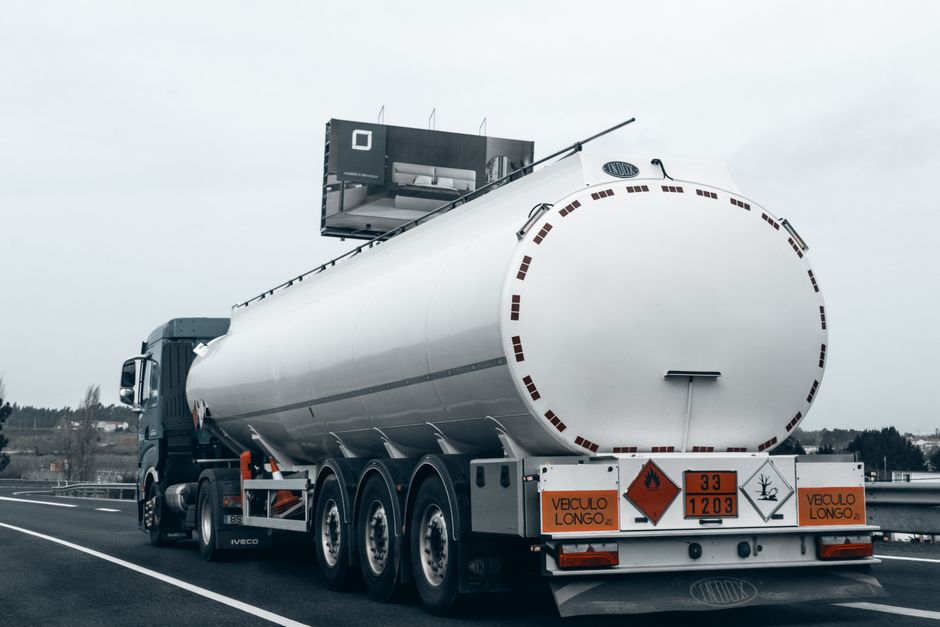
Hazmat routing adds another layer of complexity. Vehicles carrying hazardous materials face additional restrictions through populated areas, near water sources, and on certain bridges and tunnels. Specialized GPS apps account for these regulations when you specify hazmat cargo.
Offline Navigation Capabilities Matter
Cellular coverage remains spotty in many rural areas where trucks frequently travel. Losing GPS signal in unfamiliar territory creates dangerous uncertainty. The best truck navigation apps include offline map capabilities that function without cellular data.
These apps allow you to download regional or national map databases to your device. Once downloaded, navigation continues seamlessly even in areas with no cellular service. Turn-by-turn directions, restriction data, and basic navigation features all work offline.
When cellular service resumes, the app syncs to update traffic conditions, weather information, and other real-time data. This hybrid approach ensures you’re never left without navigation guidance, regardless of where your routes take you.
Integration with Fleet Management Systems 📊
For company drivers or owner-operators managing multiple trucks, GPS apps that integrate with fleet management platforms provide additional value. These integrations enable dispatchers to track vehicle locations, monitor route adherence, and communicate efficiently with drivers.
Electronic logging devices (ELDs) often connect with GPS applications to provide comprehensive compliance and operational visibility. This integration streamlines recordkeeping, simplifies hours of service tracking, and creates detailed trip documentation useful for billing and performance analysis.
Real-time location sharing allows dispatchers to provide accurate delivery time estimates to customers and make informed decisions about load assignments. When unexpected delays occur, integrated systems facilitate quick communication and problem-solving.
Cost Considerations and Value Assessment 💰
Truck GPS applications range from free options with basic features to premium subscriptions costing several dollars monthly. Understanding what you’re getting for your investment helps you choose the right solution for your needs and budget.
Free apps typically offer basic truck routing with limited restriction data and fewer amenities. They serve as adequate starting points but may lack comprehensive features professional drivers rely on daily. Advertising within free apps can also prove distracting and potentially unsafe while driving.
Premium subscriptions usually include comprehensive restriction databases, regular map updates, advanced features like weather integration and fuel price comparisons, and customer support. For professional drivers, these subscriptions typically pay for themselves many times over through fuel savings, time efficiency, and avoided violations.
One-time purchase apps fall between these extremes. They require an upfront payment but don’t involve ongoing subscriptions. Map updates may cost extra or be included for limited periods. These can represent good value for drivers who want solid features without recurring costs.
Calculating Your Return on Investment
Consider the tangible benefits a quality GPS app provides. If it saves you just two hours per week through better routing, that’s over 100 hours annually—time you could spend earning revenue rather than driving unnecessarily long routes. At typical trucking rates, this time saving alone often exceeds annual subscription costs many times over.
Add fuel savings from more efficient routing, avoided fines from restriction violations, and reduced stress from navigating confidently, and the value proposition becomes even clearer. For professional drivers, a specialized GPS app isn’t an expense—it’s an investment in operational efficiency.
User Experience and Interface Design Considerations
A GPS app might have excellent features, but if the interface is confusing or difficult to use while driving, its value diminishes significantly. The best applications balance comprehensive functionality with intuitive, driver-friendly interfaces.
Large, clear buttons and text make the app usable at a glance without requiring extended attention that would compromise driving safety. Voice-guided navigation allows you to keep your eyes on the road while receiving turn-by-turn directions. Customizable display options let you prioritize the information most relevant to your needs.
Night mode with reduced brightness prevents the screen from becoming a distraction in dark conditions. Some apps automatically switch between day and night modes based on ambient light or time of day. These thoughtful design elements enhance both safety and usability.
Community Features and Crowdsourced Information 👥
The trucking community’s collective knowledge represents an invaluable resource. GPS apps that incorporate crowdsourced information from other drivers provide insights beyond what official databases contain.
Real-time reports from fellow truckers about road conditions, accidents, construction delays, safe parking availability, and even quality of facilities at truck stops help you make better decisions. This community intelligence updates faster than official sources and includes practical details only drivers would know.
Contributing your own observations helps other drivers while improving the app’s overall value. This collaborative approach creates a constantly improving navigation ecosystem that benefits all professional drivers using the platform.
Adapting to Changing Regulations and Conditions 📋
Transportation regulations, road conditions, and restrictions change constantly. Construction projects close lanes or entire routes. Seasonal weight limits vary with weather conditions. New regulations alter where and when commercial vehicles can operate.
Quality truck GPS applications maintain relationships with transportation departments and continuously update their databases to reflect current conditions. This ongoing maintenance ensures the routing advice you receive remains accurate and compliant with current regulations.
Automatic update systems download new map data and restriction information regularly, typically without requiring any action from you. This behind-the-scenes maintenance keeps your navigation tool current and reliable.
Making the Right Choice for Your Trucking Needs ✅
Selecting the best GPS app for your specific situation requires considering your typical routes, the type of freight you haul, your vehicle specifications, and your budget. Different apps excel in different areas, so matching features to your needs ensures you get maximum value.
If you primarily drive regional routes in familiar territory, you might prioritize real-time traffic and parking information over extensive cross-country routing features. Long-haul drivers covering diverse regions need comprehensive national coverage with detailed restriction data.
Specialized haulers moving oversized loads or hazardous materials should prioritize apps with robust support for these specific routing challenges. The most expensive app isn’t always the best choice—the right app is the one that best addresses your particular operational requirements.
Most quality apps offer free trials or money-back guarantees. Take advantage of these to test functionality with your actual routes before committing to a long-term subscription. Real-world testing reveals how well an app performs under your specific operating conditions.
The Future of Truck Navigation Technology 🚀
GPS technology for commercial trucking continues evolving rapidly. Emerging developments promise even greater efficiency, safety, and convenience for professional drivers in coming years.
Artificial intelligence and machine learning enable apps to learn from driving patterns and provide increasingly personalized route recommendations. These systems can predict traffic patterns, identify your preferred types of stops and routes, and proactively suggest optimizations tailored to your individual driving style.
Integration with autonomous vehicle systems represents another frontier. Even before fully autonomous trucks become common, advanced driver assistance systems will increasingly coordinate with navigation apps to optimize vehicle performance based on route characteristics ahead.
Electric and alternative fuel trucks will benefit from GPS apps that incorporate charging or refueling station networks into route planning, ensuring drivers never run out of power or fuel in areas without appropriate infrastructure.
Enhanced connectivity through 5G networks will enable even richer real-time data sharing, creating more accurate traffic predictions and faster communication of road condition changes throughout the trucking community.
Maximizing Your GPS App’s Potential
Simply having a quality truck GPS app isn’t enough—you need to use it effectively to gain full benefits. Taking time to properly configure settings, learn available features, and integrate the app into your routine maximizes its value.
Ensure your vehicle profile accurately reflects your truck’s specifications. Outdated or incorrect information undermines the app’s ability to provide appropriate routing. Update this profile whenever you change trucks or trailer configurations.
Explore all available features rather than just using basic navigation. Many drivers never discover valuable tools like fuel price comparison, parking availability reports, or weather radar overlays because they stick with familiar basic functions. Investing an hour learning your app’s full capabilities pays ongoing dividends.
Keep your app updated with the latest version. Developers continuously improve functionality, fix bugs, and update restriction databases. Automatic updates ensure you always have the most current version without needing to remember manual checks.
Provide feedback to developers when you encounter problems or have suggestions for improvements. Quality app companies value driver input and often implement user-suggested features in future updates. Your feedback helps improve the tool for everyone.
Modern trucking demands modern tools, and GPS applications designed specifically for commercial drivers have become as essential as the trucks themselves. These intelligent navigation systems transform complex routing challenges into manageable decisions, helping professional drivers operate more efficiently, safely, and profitably. Whether you’re just starting your trucking career or you’re a veteran of the highways, the right GPS app serves as an indispensable co-pilot, guiding you through the complexities of commercial transportation with confidence and precision. 🛣️
